
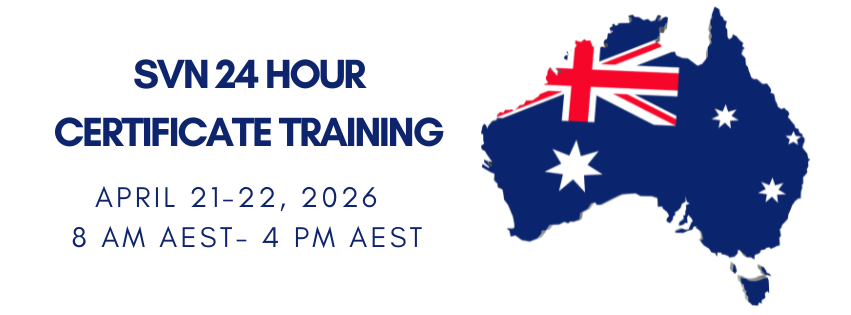
This 24-Hour Certificate Training provides comprehensive, skills-based preparation for professionals supporting children and families in supervised visitation and exchange settings. Designed as an in-depth foundational program, the training equips participants with the knowledge, practical tools, and professional confidence needed to work effectively in complex family situations.
Participants gain essential understanding of ethics, safety practices, child and family dynamics, mandatory reporting responsibilities, and professional documentation, building a strong framework for safe, neutral, and developmentally appropriate practice in supervised contact settings.
The course explores key concepts in child and family dynamics, including stages of child development; the impact of separation, divorce, and family disruption; and grief and loss associated with parental separation or removal from the home due to abuse or neglect. Participants also examine cultural sensitivity and diversity, family violence and domestic violence, child abuse and neglect (including child sexual abuse), and substance use as they relate to supervised visitation and family contact.
Additional content focuses on working with parents and children with mental health conditions, developmental disabilities, and other physical or emotional impairments. Participants also learn strategies related to parent introduction and re-introduction, parenting skill support, assertiveness, and conflict resolution.
Throughout the training, there is a strong emphasis on practical application. Participants develop skills in identifying safety concerns, understanding when and how to intervene during visits or exchanges, observing and assessing parent–child interactions, and preparing clear, factual, and objective observation notes and reports.
Upon completion, participants earn a 24-Hour Certificate, demonstrating foundational competency and professional readiness to support children and families in supervised visitation and exchange contexts.
Course Modules
- SVN Standards and Code of Ethics;
- Provider policies and procedures;
- Safety for all participants;
- Mandatory child abuse reporting;
- Professional boundaries, conflict of interest, confidentiality, and maintaining neutrality;
- Basic stages of child development;
- Effects of separation and divorce on children and families;
- Grief and loss associated with parental separation and removal from the home due to child abuse and neglect;
- Cultural sensitivity and diversity;
- Family violence, including domestic violence and the effects of domestic violence on children;
- Child abuse and neglect, including child sexual abuse;
- Substance abuse;
- Provisions of service to parents and children with mental health and developmental issues or other physical or emotional impairment;
- Parent introduction/re-introduction;
- Parenting skills;
- Assertiveness training and conflict resolution;
- How and when to intervene during visits or exchanges to maintain the safety of all participants;
- Observation of parent/child interactions;
- Preparation of factual observation notes and reports; and
- Relevant laws regarding child custody and visitation and child protection.
Course Access & Technology Requirements
Live Virtual Training Participation Requirements
Full and active participation is required for the entire live training session.
Participants must join via Zoom using a personal computer or laptop equipped with a working webcam and microphone. Mobile phones, tablets, shared devices, and shared screens are not permitted.
Attendees are expected to remain visually and audibly present for the duration of the session and participate from a quiet, professional environment. Running errands, attending other appointments, driving, or multitasking during the training is not allowed.
Please test your Zoom access, internet connection, camera, and audio in advance to ensure full participation and eligibility to receive your certificate.
Intersted in registering mulitple attendees? Feel free to reach out to us at info@svnworldwide.org to request an invoice.
Certificate vs Certification? What's the difference?
Certificate Training is a structured learning program designed to achieve specific learning outcomes and includes assessments to measure participant achievement. Unlike trainings that only provide certificates of attendance, this program evaluates learning through formal assessment.
Participation is optional, and SVN members may meet the Supportive Supervised Visitation Training requirement through other approved means.
This program was developed in response to a 3-year environmental survey, which revealed that nearly half of members lacked access to adequate training opportunities.
The certificate program supports providers seeking to meet SVN requirements or obtain formal recognition of completed training. While aligned with SVN standards, it may also meet certain state or governmental requirements; participants should verify applicability within their jurisdiction.